
Chemical Spraying & Lawn Care Application Insurance: What It Actually Costs and Covers
Kenneth Schaub, Owner & Licensed Insurance Advisor
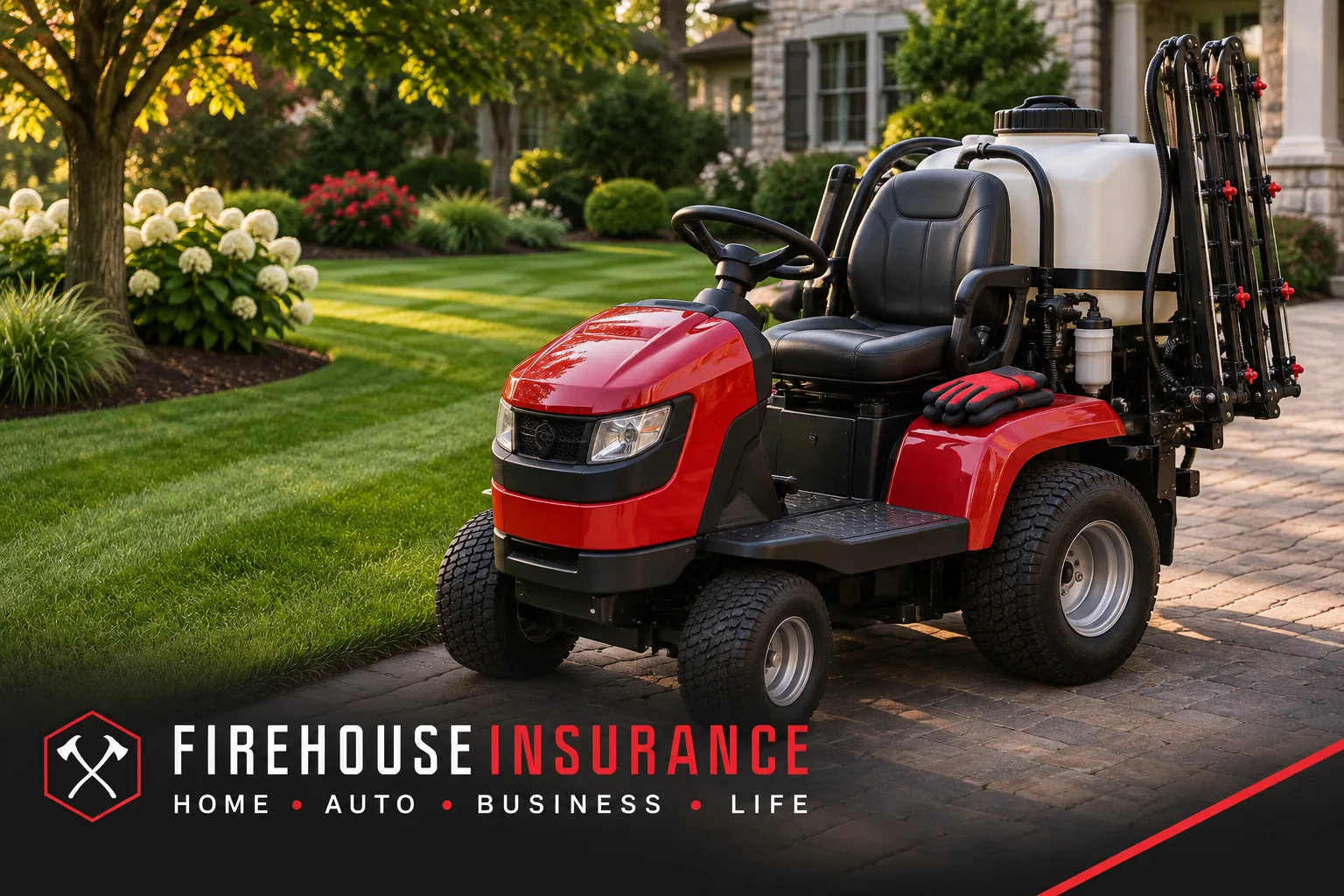
General liability insurance for mowing-only lawn care typically runs $40 to $65 a month, roughly $500-$800 a year, but the moment a business adds pesticide, herbicide, or fertilizer spraying, the insurance picture changes completely. Chemical application is a distinct, separately-regulated, separately-insured activity, not an add-on to routine lawn mowing coverage.
Why Is Chemical Application Treated Differently From Mowing?
Pesticides and herbicides are legally classified as pollutants. A standard general liability policy's pollution exclusion means drift onto a neighboring property, misapplication, or chemical damage to a customer's own landscaping is typically not covered unless you've added a pesticide applicator endorsement or a separate pollution liability policy.
What Does My State Actually Require?
Requirements vary significantly and are set by state pesticide regulators, not the insurance industry:
- Pennsylvania requires at least $100,000 per occurrence for bodily injury and $100,000 for property damage for licensed pesticide applicators.
- Massachusetts sets a base tier of $50,000 per occurrence bodily injury ($100,000 aggregate) and $50,000 property damage.
- Minnesota allows commercial applicators to satisfy financial responsibility through insurance, a bond, or a net-assets statement of at least $50,000.
These are regulatory minimums, not recommended coverage, most commercial clients and HOAs expect $1 million in limits regardless of your state's licensing floor.
Table: Mowing-Only vs. Chemical Application Insurance
| Mowing-only lawn care | Adds chemical application | |
|---|---|---|
| Typical GL premium | ~$40-$65/month | Same GL, plus pollution add-on |
| Pollution liability needed? | No | Yes, nearly always |
| State license required? | Usually no | Yes, in most states |
| Proof of insurance required for license? | No | Often yes |
Does a Bigger General Liability Limit Fix the Gap?
No. Raising your GL limit doesn't touch the pollution exclusion, it's a separate exclusion, not a limits problem. The only way to actually cover chemical drift and misapplication is a pesticide applicator endorsement or standalone pollution liability policy.
Get a quote for your lawn care or chemical application business, or see Firehouse's commercial contractor coverage.
Frequently asked questions
Does my mowing-only lawn care insurance automatically cover pesticide or herbicide application?
No. Standard general liability policies exclude pollution-related damage, and pesticides and herbicides are legally classified as pollutants, you need a separate pesticide applicator endorsement or pollution liability policy to add chemical work.
What happens if pesticide drifts onto a neighboring property during an application?
That's specifically excluded under a standard general liability policy's pollution exclusion. Without a pollution liability endorsement, the claim is typically denied, this is the single most common coverage gap in this trade.
Do I need a state license to apply lawn chemicals commercially?
In most states, yes, and most states also require proof of liability coverage as part of that licensing process, requirements range from $50,000 to $100,000 in minimum limits depending on the state.
Does raising my general liability limit cover chemical application work?
No, pollution damage is excluded regardless of your limit size, you need a specific endorsement or standalone policy, not a bigger number on your existing policy.
How much more does insurance cost once I add chemical application to a mowing business?
It varies, but budget for a separate pollution liability line item in addition to your existing general liability premium, rather than assuming a modest GL increase covers it.
Ready to see your real rate?
Get My Quote