
What Insurance Does a Horizontal Directional Drilling or Fiber Installation Contractor Need?
October 22, 2026 · Kenneth Schaub, Owner & Licensed Insurance Advisor
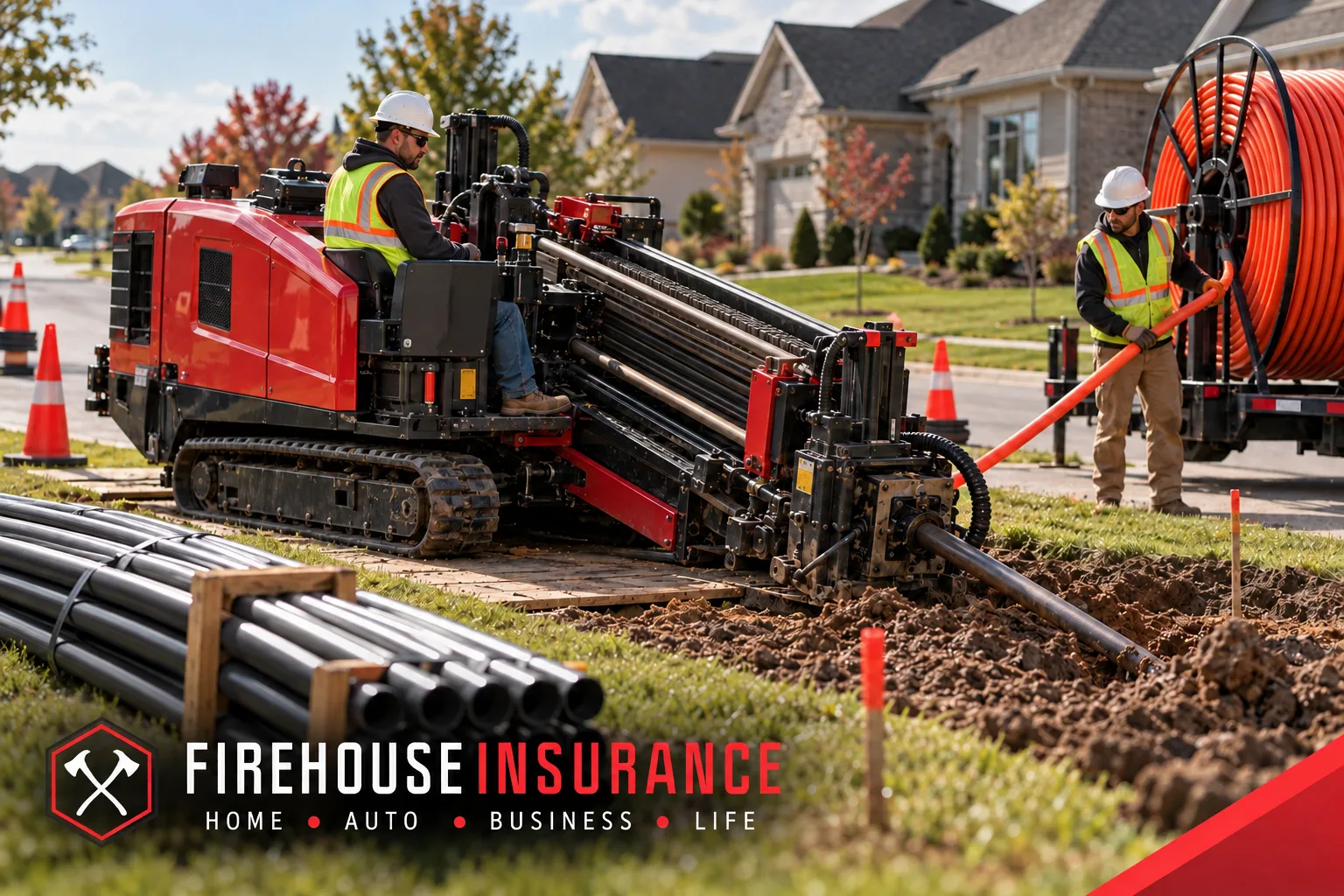
Horizontal directional drilling (HDD) and fiber installation contractors need more than a standard general liability policy. The real exposures in this trade, utility strikes and drilling fluid releases, are the exact risks that generic contractor policies tend to exclude or underinsure.
Why is HDD a different underwriting problem than regular excavation?
In trenchless and directional drilling work, the contractor often never sees the utility line, pipe, soil condition, or pressure pathway that ultimately causes a loss. Unlike open-trench excavation where you can see what you're digging near, HDD work happens blind, underground, often beneath roads, rail lines, or other live utility corridors. That blind exposure is exactly what makes it a distinct insurance category.
What coverage does an HDD or fiber contractor actually need?
- Commercial general liability — the baseline, but needs to specifically cover underground utility work, not just general construction
- Commercial auto — for drill rigs, support vehicles, and equipment transport
- Workers' compensation — required in nearly every state once you have employees
- Inland marine — covers the drilling equipment itself, often the single most expensive asset in the business
- Umbrella or excess liability — extends your limits above a standard GL policy, important given how costly a single utility strike can get
- Contractor's pollution liability — covers contamination from a drilling fluid release, something a standard GL policy typically excludes
What are the two biggest real risks in this trade?
Utility strikes. The bore hits a buried utility line, gas, electric, fiber, water, that wasn't accurately located or marked beforehand.
Frac-outs. Pressurized drilling fluid unexpectedly returns to the surface instead of staying in the bore path, which can mean environmental cleanup costs and third-party property damage.
How expensive can a single utility strike actually get?
Direct repair costs for a utility strike average $3,500 to $4,000. But that's rarely the full story, once you factor in cleanup, service interruption to the utility's customers, and third-party claims, the total economic impact can run many times higher than the direct repair cost alone. This is exactly why inland marine and pollution liability coverage matter so much in this trade, a standard GL-only policy can leave a contractor seriously exposed on a single bad bore.
Frequently asked questions
Does regular general liability insurance cover a utility strike?
Not fully. Standard GL often excludes the kind of underground utility damage and pollution exposure that comes with directional drilling work. HDD contractors typically need contractor's pollution liability and inland marine coverage on top of GL to be properly covered.
What is a frac-out in directional drilling?
A frac-out happens when pressurized drilling fluid unexpectedly returns to the surface instead of staying contained in the bore path, which can create real environmental cleanup costs and third-party property damage.
Why do HDD contractors need inland marine coverage?
Inland marine covers the drilling rig and equipment itself, often the most valuable asset in the business, and it's not something a standard general liability or property policy typically covers.
Ready to see your real rate?
Get My Quote