
Office Building Insurance: What It Actually Costs and Covers
Kenneth Schaub, Owner & Licensed Insurance Advisor
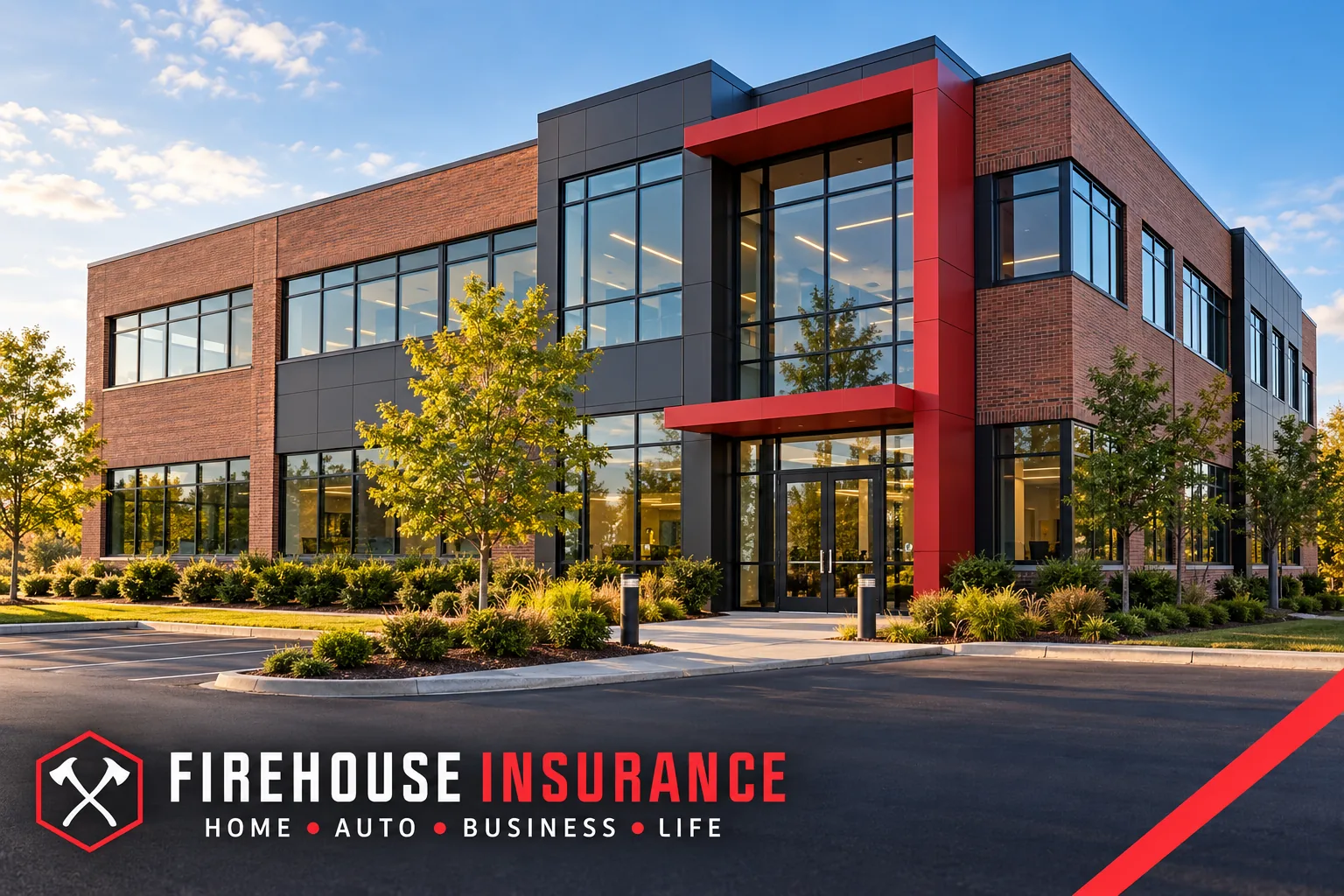
Office buildings are among the least expensive commercial property types to insure, typically $0.20 to $0.60 per square foot per year for lower-risk properties.
How much does office building insurance cost?
Office property generally runs cheaper to insure than retail or habitational buildings, roughly $0.20 to $0.60 per square foot per year for lower-risk properties, sometimes up to $1.50/sq ft depending on specific risk factors, reflecting the lower fire load and fewer hazardous occupancies compared to other commercial property types.
What is the 80% coinsurance rule, and why does it matter so much?
This is the single most consequential detail in office property insurance, and it's widely misunderstood. If you insure your building for less than 80% of its real value, every claim payout gets reduced proportionally, not just the amount you're underinsured by.
Here's a real example: a $2 million building insured for only $1.4 million against an 80% ($1.6 million) requirement suffers a $100,000 loss. The payout isn't $100,000, it's calculated as ($1,400,000 / $1,600,000) × $100,000 = $87,500. The owner eats $12,500 out of pocket on a partial loss, purely from underinsuring the structure. This penalty applies to every claim for the full policy term, including small routine losses that have nothing to do with the underinsured value, until the policy is rewritten at full value.
Does standard coverage pay to rebuild to current code?
Not without a specific endorsement. Ordinance-or-law coverage can add 50% or more to a claim's total cost after a loss, because standard policies without it only rebuild "like kind and quality," not to current code. If your building is older, this gap matters more, older buildings are more likely to trigger code-upgrade requirements after a significant loss.
How much liability does elevator and escalator risk actually carry?
More than most office owners realize. Roughly 17,000 people are injured annually in elevator and escalator accidents nationwide, about 10,200 elevator-injury incidents and 10,000 escalator-related ER visits, with 30+ deaths a year, elevators account for 90% of those fatalities. Real settlements show the exposure: $8 million in a New Jersey case where a man fell 8 feet into an open elevator shaft and suffered a traumatic brain injury, naming both the property owner and the maintenance company; a separate $7 million elevator shaft fall case; a $1.5 million New York elevator negligence settlement.
How is office vacancy affecting insurance right now?
Materially. National office vacancy sat around 17.8% to 19.8% as of September 2026, still near record highs post-pandemic. Underwriters have responded with tighter terms in high-vacancy submarkets, many now require a $2 million attachment point before umbrella coverage applies, with narrower appetite and deeper scrutiny of site security, building condition, and loss history for buildings carrying elevated vacancy. If your building's occupancy has shifted meaningfully, it's worth a real coverage review, not just a renewal rubber-stamp.
See full coverage details for Office Building Insurance, or start a free quote to compare your own numbers.
Frequently asked questions
What is the 80% coinsurance rule and how does it affect my claim payout?
If your building is insured below 80% of its real value, every claim payout gets reduced proportionally, not capped at the shortfall. A relatively small gap in coverage can mean a meaningfully smaller payout on every single claim until the policy is rewritten at full value.
Does my policy cover elevator or escalator liability?
General liability typically covers it, but given real settlements in this category reaching into the millions, confirming your limits are adequate, and that your maintenance contractor carries their own coverage too, matters more than most owners realize.
Does my lender require a specific amount of property insurance coverage?
Almost always, and it's worth confirming that requirement explicitly meets or exceeds the 80% coinsurance threshold, not just whatever minimum your lender initially quoted, since underinsuring affects every future claim, not just a catastrophic one.
Ready to see your real rate?
Get My Quote