
Landlord Insurance: What Actually Changes Between 1-4 Units and 5+
October 22, 2026 · Kenneth Schaub, Owner & Licensed Insurance Advisor
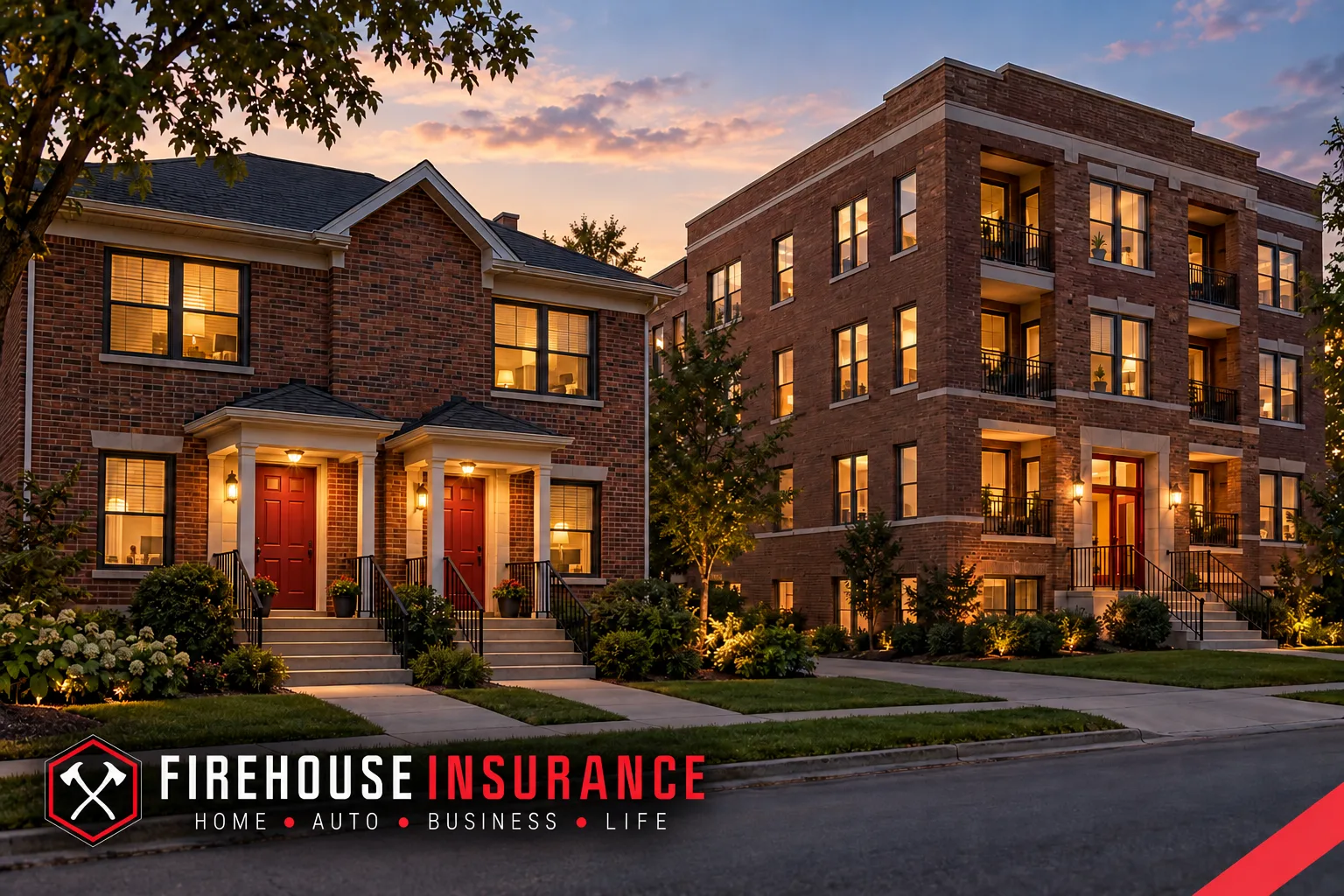
Whether a rental property is insured on a personal policy or a commercial one comes down almost entirely to one number: how many dwelling units are on it. One to four units is typically personal landlord insurance. Five or more units moves to a commercial policy, with different underwriting, different forms, and usually a different price per unit.
Why does the line get drawn at four units?
Most insurance carriers, and most mortgage lenders, treat 1-4 unit residential properties the same way they treat a single-family home: a simpler risk that fits standard dwelling-fire or landlord forms. At five units, a property crosses into what carriers classify as multifamily or habitational risk, which uses commercial underwriting instead.
This isn't a Firehouse rule, it's an industry-wide convention both insurers and lenders use. A 4-unit property can often get financed with a residential-style mortgage; a 5-unit building typically needs a commercial loan. Insurance follows the same split.
What actually changes between the two?
| 1-4 Units (Personal) | 5+ Units (Commercial) | |
|---|---|---|
| Policy type | Landlord/dwelling-fire form | Commercial habitational package |
| Underwriting | Simplified, similar to a single-family home | Full commercial underwriting |
| Pricing | Generally lower per unit | Generally higher per unit, reflects larger total exposure |
| Customization | Limited | Higher limits, more endorsement options |
| Typical lender fit | Residential-style mortgage | Commercial loan |
Does my price actually go up if I add a fifth unit?
Often, yes, but not because the property got riskier overnight. The jump reflects a genuinely larger total exposure (more tenants, more liability, more property value in one building) and the cost of fuller commercial underwriting, not a penalty for crossing an arbitrary line.
What should I do before buying a 5th unit or a 5+ unit building?
Talk to your advisor before you close, not after. If you're adding a unit to an existing 4-unit property, your current personal landlord policy will need to move to a commercial one, and it's better to have that lined up before the change takes effect than to find out you have a coverage gap after a loss.
Frequently asked questions
Is a duplex covered under personal or commercial insurance?
Personal. A duplex is a 2-unit property, well under the 5-unit threshold, so it's typically covered under a standard personal landlord or dwelling policy, not a commercial one.
What happens to my insurance if I buy a 5th unit?
Your property moves from personal landlord coverage to a commercial habitational policy. This usually needs to happen before you close on the purchase, not after, so there's no gap in coverage.
Is 5+ unit insurance always more expensive than 1-4 unit insurance?
Per unit, often yes, since the property represents a larger total exposure and uses fuller commercial underwriting. But it's not a penalty, it reflects the actual larger risk being insured, not an arbitrary price jump.
Ready to see your real rate?
Get My Quote